

Article updated on 11 November 2026.
Yamaha B Series: differences between the B10, B20 and B30 pianos
Choosing an upright piano for your home means finding the right balance between sound, space and your playing needs. With its renewed B Series, Yamaha presents three acoustic instruments designed with these considerations in mind: the B10, B20 and B30.
All three share an updated construction, a wider music stand and versions featuring SILENT Piano™ and TransAcoustic™ technology. Their main differences lie in their dimensions and in the sound offered by each size of instrument.
In this guide, we explain what has changed from the previous b series, how the new models compare and what to consider when choosing your piano.
You can also explore our selection of Yamaha upright pianos and discover other options among the pre-owned pianos available at Royal Pianos.
Yamaha B Series: a new generation of upright pianos
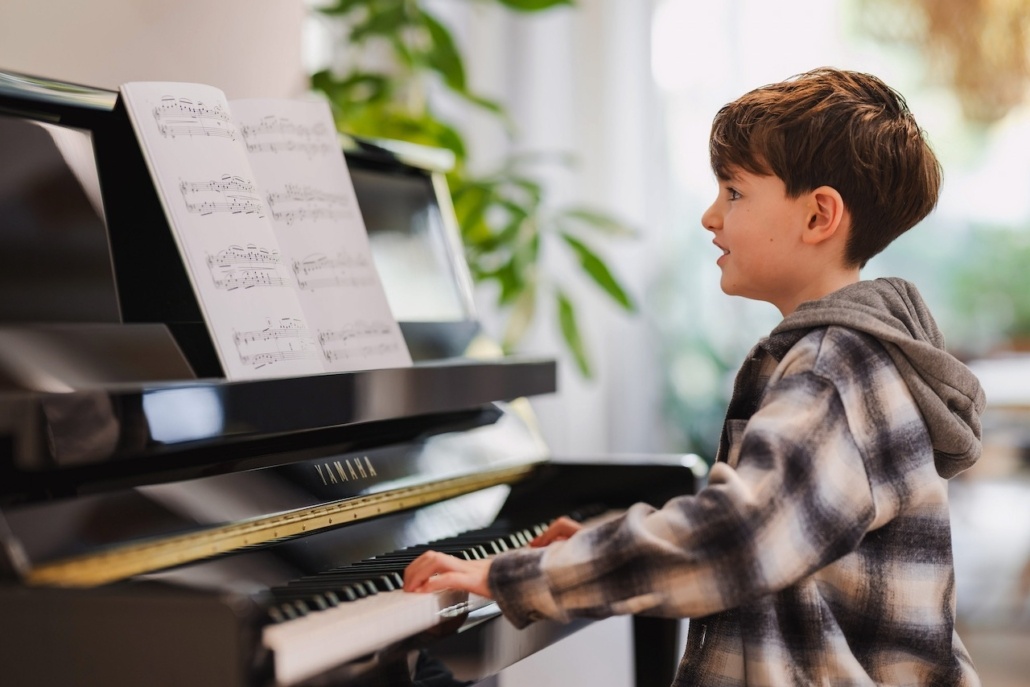
The new B Series succeeds Yamaha’s familiar b series of upright pianos, which has been a presence in homes, schools and practice rooms for many years.
For this new generation, Yamaha has worked on the sound as well as the details that influence everyday playing. The main features include:
- Newly developed hammers, created using knowledge gained from Yamaha’s CFX concert grand piano.
- A redesigned soundboard, intended to provide clear, expansive resonance.
- Five back posts on all three models, helping to support the structure of the instrument.
- A wider music stand, designed to hold several pages of sheet music.
- A soft-close keyboard lid, which helps prevent the lid from closing abruptly.
- SILENT Piano™ and TransAcoustic™ versions of all three models, subject to availability.
Yamaha has also increased the height of the more compact models compared with the previous generation, allowing for a larger soundboard area.
You can find further information on the official Yamaha B Series page.
Yamaha B10, B20 and B30 comparison
The most visible difference between the three models is their size. The B10 is the most compact, the B20 sits in the middle of the range and the B30 reaches 121 cm in height, making it a standard-sized upright piano.
| Model | Height | Width | Depth | Weight | Suitable for |
|---|---|---|---|---|---|
| Yamaha B10 | 110 cm | 150 cm | 55 cm | 200 kg | Those looking for a compact piano for the home |
| Yamaha B20 | 116 cm | 153 cm | 58 cm | 220 kg | Those seeking a balance between size and tonal presence |
| Yamaha B30 | 121 cm | 153 cm | 62 cm | 232 kg | Those who prefer a standard-sized upright piano |
Dimensions and weights refer to the acoustic versions. Measurements for SILENT Piano™ and TransAcoustic™ versions may vary.
As well as considering the space the piano will occupy, it is worth thinking about access to your home, where the instrument will be placed and any transport requirements.
Yamaha B10: a compact acoustic piano for the home
At 110 cm tall, the Yamaha B10 is the most compact model in the range. It can be a good choice for those beginning to learn on an acoustic piano or looking for an instrument for the home without choosing a larger model.
Its compact dimensions make it particularly appealing where space is limited. It retains the features shared across the series, including the wide music stand, soft-close keyboard lid and newly developed hammers.
The B10 is also offered as the Yamaha B10SC3 SILENT Piano™ and the Yamaha B10TC3 TransAcoustic™, subject to availability.
Yamaha B20: a balance of size and sound
The Yamaha B20 stands 116 cm tall and offers a middle option for those with a little more space available.
Its larger size allows for a greater soundboard area than the B10, which can contribute to a broader sound. It is an appealing model for students, families and enthusiasts looking for a piano to accompany them through years of practice.
Yamaha also offers the Yamaha B20SC3 SILENT Piano™ and Yamaha B20TC3 TransAcoustic™, subject to availability.
Yamaha B30: a standard-sized upright piano
At 121 cm tall, the Yamaha B30 is the largest model in the series. It is designed for those who prefer an upright piano with a greater presence and want to explore the sound of an instrument in this size.
It can be an option for students and pianists who value having a standard-sized acoustic piano at home, in a school or in a rehearsal room.
As with the other models, there are also Yamaha B30SC3 SILENT Piano™ and Yamaha B30TC3 TransAcoustic™ versions, subject to availability.
The choice between the three models also depends on the room and each pianist’s preferences. For this reason, whenever possible, we recommend listening to and playing the instrument before making a decision.
What improvements does the new Yamaha B Series offer?
A redesigned soundboard and newly developed hammers
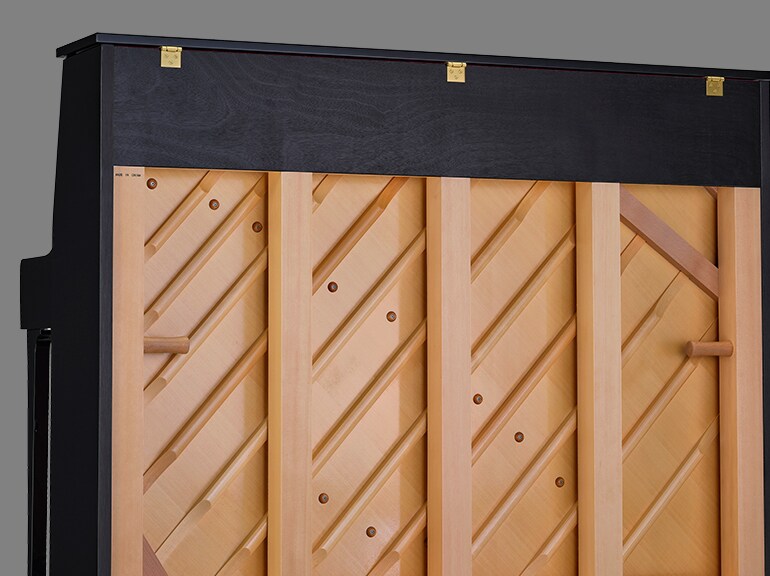
The soundboard is one of the fundamental parts of an acoustic piano: it transmits and amplifies the vibrations produced by the strings. For the new B Series, Yamaha has revised its design to support a broad, clear resonance, even in the more compact models.
The company has also developed new hammers using knowledge gained during the creation of the Yamaha CFX, its concert grand piano. The treatment of the felt is intended to produce a defined tone and an expressive response across the different registers.
In the B10 and B20, the increase in height compared with their predecessors allows for a larger soundboard area. Yamaha also notes that longer bass strings contribute to a balanced sound in the lower register.
A wider music stand for comfortable practice
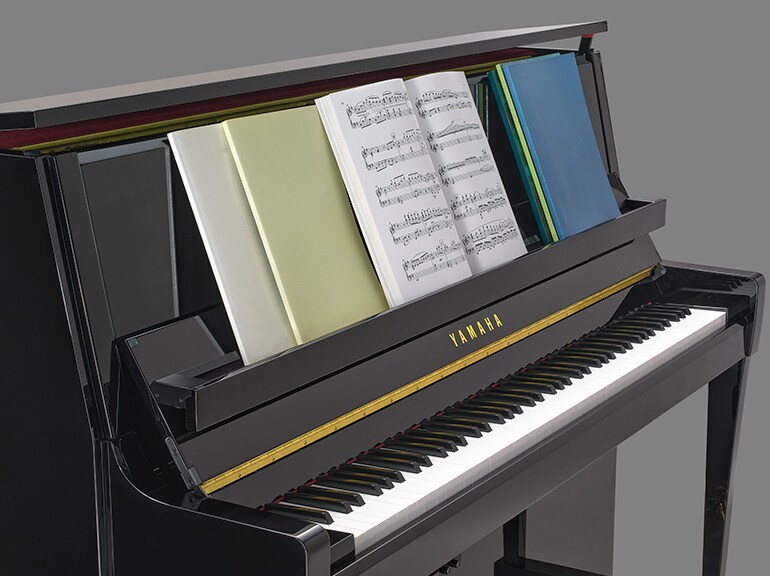
The new music stand extends across almost the full width of the keyboard lid. This makes it easier to place several pages side by side, which is particularly useful when practising or playing longer pieces.
It is a helpful detail for pianists who spend time practising and want to reduce the need to turn pages.
Soft-close keyboard lid
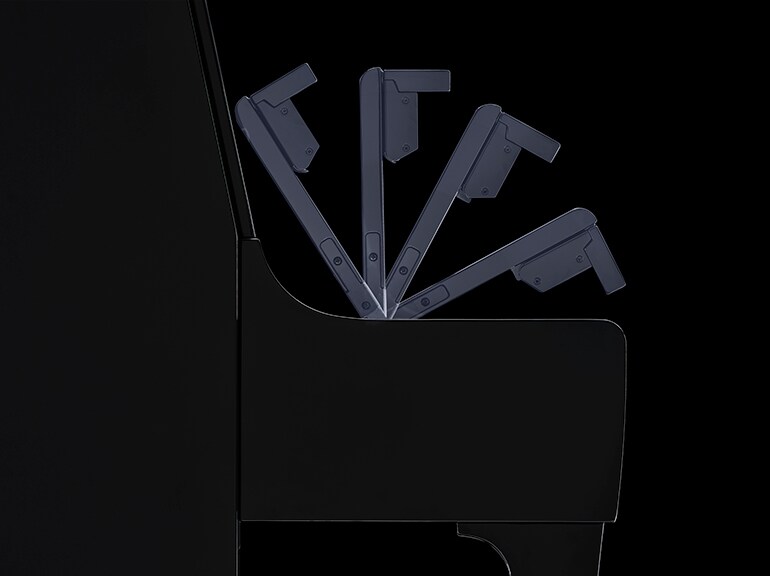
All three models include a soft-close mechanism that helps prevent the keyboard lid from closing suddenly. It is a practical feature in homes with children and in educational spaces where the piano is used by several people.
Yamaha SILENT Piano™ and TransAcoustic™: what is the difference?
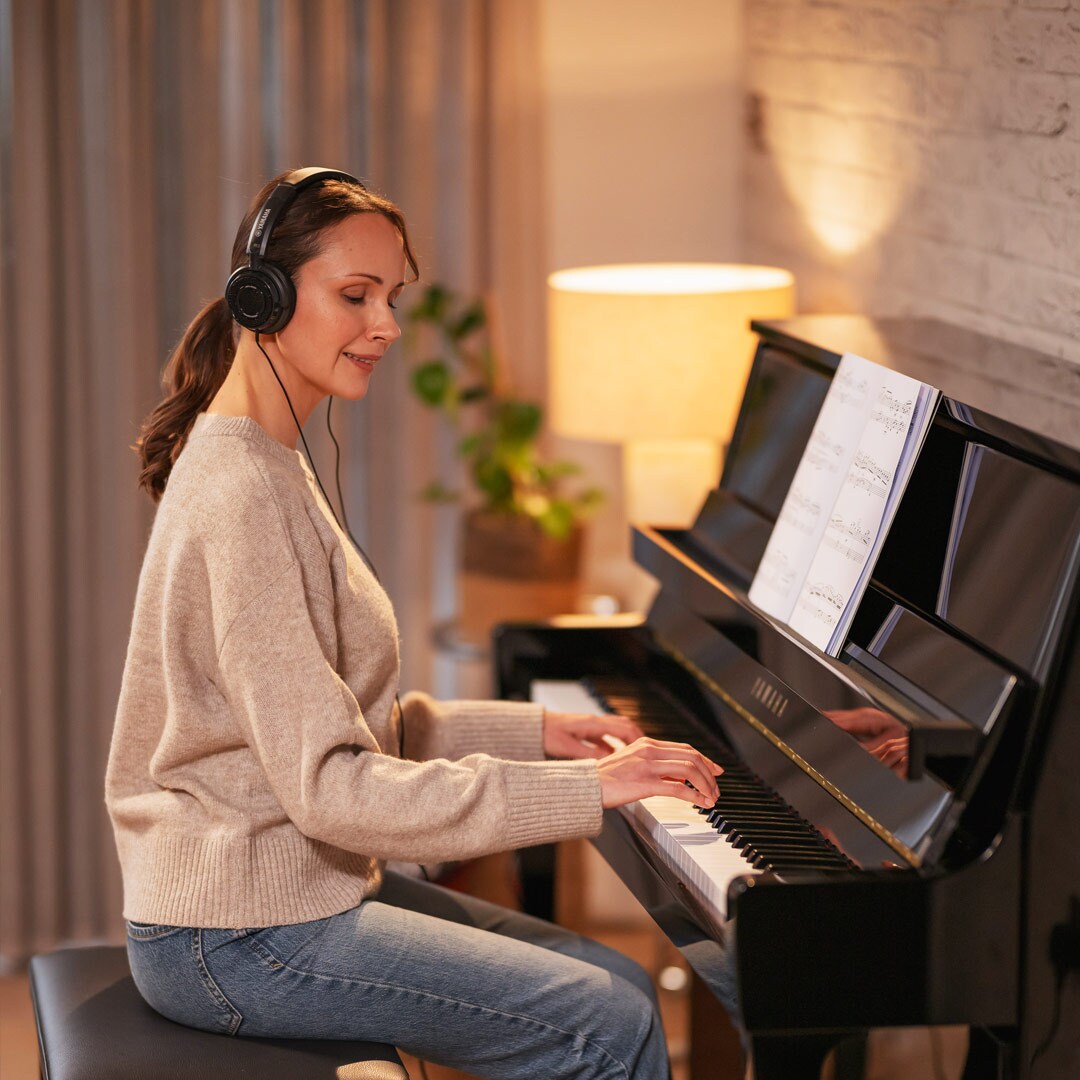
All three B Series models are offered with either SILENT Piano™ or TransAcoustic™ technology. Both options are based on an acoustic piano, but they meet different needs.
SILENT Piano™: practise with headphones
Yamaha Silent pianos can be played as acoustic instruments and, when needed, switched to silent mode for practice with headphones.
This can be useful for those living in a flat, sharing a home or wishing to practise at times when the acoustic sound might disturb others.
In the B Series, SILENT Piano™ versions are identified by the SC3 designation:
TransAcoustic™: control the volume while enjoying the piano’s resonance
Yamaha TransAcoustic™ technology allows you to control the volume and use the instrument’s own soundboard to reproduce digital sound.
It is an option for those who want greater flexibility over volume while still enjoying the resonance of the piano without always relying on headphones.
The TransAcoustic™ versions in this range are identified by the TC3 designation:
Availability of models, systems and finishes may vary. Please contact our team before making your choice.
Which Yamaha B Series piano should you choose?
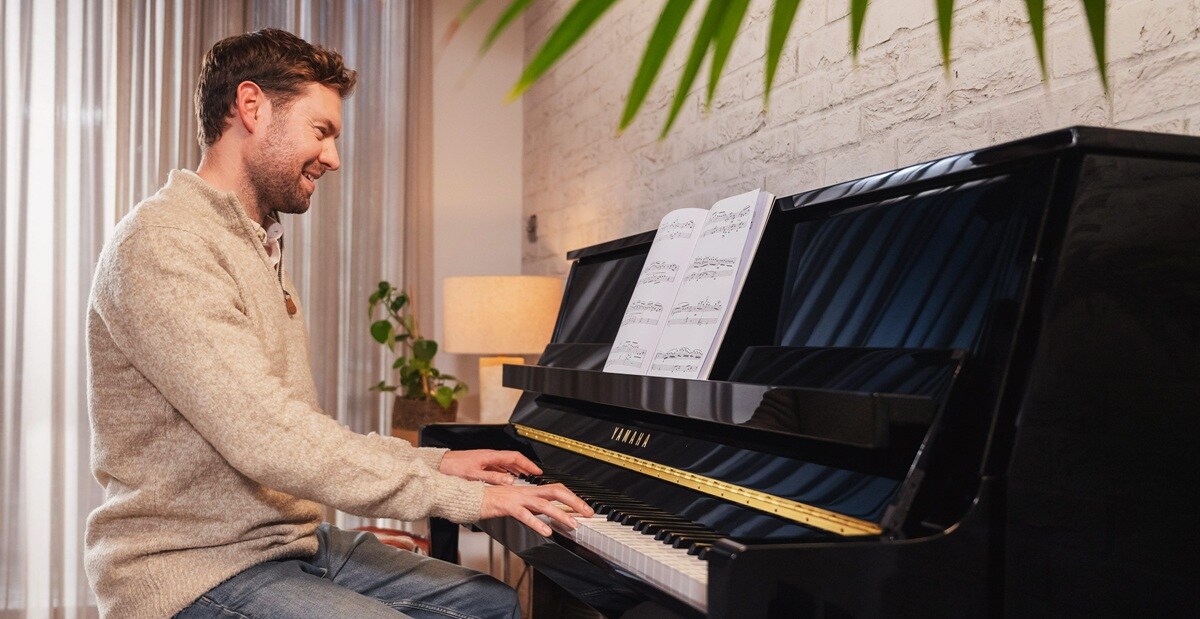
There is no single model that is right for everyone. The best choice will depend on your available space, budget, playing experience and how you intend to use the instrument.
- Yamaha B10: consider this model if you are looking for the most compact option in the series for practice or playing at home.
- Yamaha B20: consider this model if you have a little more space and want a middle option within the range.
- Yamaha B30: consider this model if you prefer a standard-sized upright and have room for a taller, deeper instrument.
- SILENT Piano™ or TransAcoustic™ versions: consider these if you need greater flexibility to practise at different times of day.
Before deciding, it can also be helpful to speak to your teacher or a specialist. The acoustics of the room, the feel of the keyboard and your personal preferences can all influence your choice.
Yamaha B Series finishes and availability
Yamaha has introduced the series in several polished finishes:
- Polished ebony (PE).
- Polished ebony with chrome details (PEC).
- Polished white (PWH).
- Polished white with chrome details (PWHC).
Availability may vary according to the model, version and market. At Royal Pianos, we can help you check the options available for the instrument that interests you.
Other options: Yamaha upright pianos and pre-owned pianos
The B Series is one option within Yamaha’s acoustic piano range. If you are comparing different sizes, features or budgets, you can explore our selection of Yamaha upright pianos and discover other models from the brand.
A pre-owned instrument may also be worth considering. In our pre-owned pianos section, you can find alternatives from different manufacturers with a variety of features. Availability changes as instruments are added to or removed from the selection.
If you would like to learn more about the brand’s different ranges, you can also read our Yamaha piano guide or explore our selection of Yamaha acoustic upright pianos.
Frequently asked questions about the Yamaha B10, B20 and B30
What is the difference between the Yamaha B10 and B20?
The B10 is 110 cm tall and is the most compact model in the series. The B20 is 116 cm tall and has a larger soundboard area. It is also wider, deeper and heavier, so it is worth considering both the space available and the sound you are looking for.
What is the difference between the Yamaha B20 and B30?
The B20 is 116 cm tall, while the B30 reaches 121 cm. Both share the main features of the range, but the B30 is a larger and deeper instrument.
Are the Yamaha B10, B20 and B30 acoustic pianos?
Yes. All three are acoustic upright pianos: their sound is produced by strings and hammers. Yamaha also offers versions featuring SILENT Piano™ or TransAcoustic™ technology to provide additional ways to play.
Can I play a B Series piano with headphones?
Yes, on versions equipped with SILENT Piano™ or TransAcoustic™. The standard acoustic models do not include this feature.
Is the Yamaha B Series suitable for learning the piano?
Yes. All three models can be used for practice and study. The right choice will depend on the student’s level and goals, as well as the available space and budget. For conservatoire studies, it is also advisable to consider the teacher’s recommendations.
How much space does a Yamaha B10, B20 or B30 need?
The B10 measures 150 cm wide and 55 cm deep; the B20 measures 153 × 58 cm; and the B30 measures 153 × 62 cm. In addition to the dimensions of the instrument, allow enough room for the stool and a comfortable playing position, and check access for delivery.
Does the new B Series replace the Yamaha b1, b2 and b3?
The new B Series represents an evolution of Yamaha’s previous b series. The B10, B20 and B30 occupy the positions previously held by the b1, b2 and b3 respectively, with changes to their design, sound and features. Availability of earlier models may depend on remaining stock.
Discover the Yamaha B Series at Royal Pianos
At Royal Pianos, we can help you compare the Yamaha B10, B20 and B30 and find the configuration that best suits your space and the way you play.
You can also ask our team about financing and piano rental with the option to purchase, as well as our specialist piano transport and tuning and maintenance services.
If you would like to visit one of our showrooms, we recommend checking the availability of the models and versions you wish to see beforehand.
Would you like to find out which model, finish or system is available? Contact Royal Pianos and our team will be happy to help.



Leave a Reply
Want to join the discussion?Feel free to contribute!