

Learning to play the piano has never been more accessible than it is today. Thanks to advances in artificial intelligence, a new generation of apps has emerged that can listen to your performance, detect mistakes in real time, and help you improve through increasingly sophisticated learning systems.
What started as simple apps for following sheet music or learning songs has evolved into a new generation of tools capable of analyzing a student’s performance, providing instant feedback, and adapting exercises according to their skill level.
This evolution has sparked the interest of thousands of people looking for a more flexible way to learn piano from home. However, the current market is vast, and it is not always easy to know which app to choose.
Some platforms are designed for complete beginners who want to play their first songs as quickly as possible. Others offer advanced features for intermediate students, experienced pianists, and even music teachers.
Moreover, not all of them use artificial intelligence in the same way. While some focus on note and rhythm recognition, others incorporate more advanced systems capable of analyzing musical performance or generating personalized recommendations.
In this guide, we review the most interesting piano learning apps of 2026, explain their key features, and help you understand which one may best suit your goals.
The Best AI Piano Learning Apps in 2026
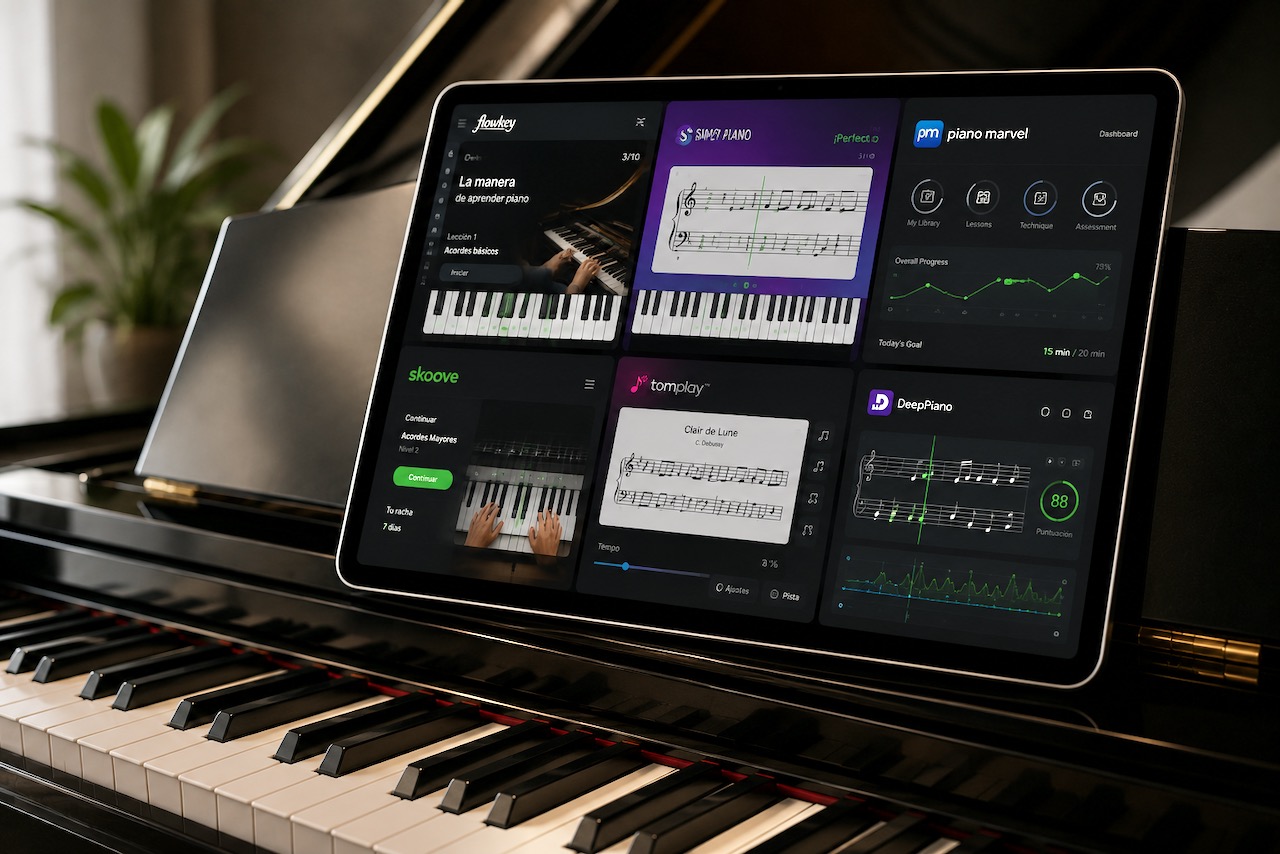
| App | Beginners | Intermediate | Advanced | AI | Sheet Music |
|---|---|---|---|---|---|
| DeepPiano | Medium | High | Very High | Very High | High |
| Flowkey | Very High | High | Medium | High | High |
| Simply Piano | Very High | Medium | Low | Medium | Medium |
| Piano Marvel | Medium | High | High | High | High |
| Skoove | High | Medium | Medium | Medium | Medium |
| Tomplay | Low | High | Very High | Low | Very High |
There are currently dozens of apps designed to help people learn the piano, but only a few truly stand out for the quality of their content, the accuracy of their recognition systems, and the overall learning experience they provide.
Among the most interesting platforms are solutions with very different approaches. Some focus on step-by-step guided learning, others emphasize music reading, while others leverage artificial intelligence to provide advanced performance analysis.
These are the apps we’ll be reviewing in this guide:
Each of them has its own strengths, limitations, and target audience. That’s why there is no single perfect app for every student.
Before comparing them in detail, it’s worth taking a closer look at what each one offers and why they are generating so much interest among pianists around the world.
DeepPiano
DeepPiano is one of the most innovative applications to emerge recently in the field of AI-assisted music learning.
Unlike many platforms that focus exclusively on teaching songs or basic exercises, DeepPiano places its emphasis on performance analysis and intelligent interaction with sheet music.
Its approach is particularly appealing to students who want to better understand how they are playing and receive more detailed insights into their performance.
The app uses recognition and analysis technologies to compare the user’s performance with the original score and identify potential mistakes or deviations.
This approach makes it more of a study tool than a traditional educational app.
DeepPiano Highlights
- Advanced performance analysis.
- Intelligent interaction with sheet music.
- Innovative AI-powered approach.
- Especially valuable tools for intermediate and advanced students.
- Detailed progress tracking.
Things to Consider
- May be less intuitive for complete beginners.
- It has not yet achieved the popularity of more established platforms.
- Its focus is geared more toward serious study than entertainment.
Who Is It Recommended For?
DeepPiano is particularly appealing to students who already have some experience with the instrument and want to take advantage of more advanced analytical tools than those offered by traditional piano learning apps.
It is also an interesting platform for music teachers and musicians looking to explore new ways of integrating artificial intelligence into music education.
Flowkey
If there’s one app that has popularized learning piano from home over the past few years, it’s Flowkey. Its combination of video lessons, synchronized sheet music, and note recognition has made it one of the most widely used platforms among piano students worldwide.
One of Flowkey’s greatest strengths is that it allows you to learn using either an acoustic piano or a digital piano. The app listens to your performance and checks whether you’re playing the correct notes, creating a far more interactive experience than simply following video tutorials.
Its library includes hundreds of pieces across a wide range of styles and difficulty levels, from classical music to movie soundtracks and popular songs.
The platform is designed to help students progress gradually by combining technical exercises with real musical pieces from the very beginning of the learning process.
Flowkey Highlights
- Simple and intuitive interface.
- Extensive song library.
- Compatible with both acoustic and digital pianos.
- Ideal for beginners.
- Progressive and easy-to-follow learning path.
Things to Consider
- Performance analysis features are more limited than those offered by specialized platforms.
- It focuses more on practical learning than in-depth technical study.
- Advanced students may require additional learning tools.
Who Is It Recommended For?
Flowkey is an excellent choice for anyone who wants to start learning piano in a simple and motivating way. It is also a great option for intermediate players looking to expand their repertoire or practice new pieces.
Simply Piano
Simply Piano is probably one of the best-known apps for people who want to learn piano from scratch. Its success is built around a very clear philosophy: making piano learning accessible to everyone, even those with no previous musical experience.
The platform uses a guided progression system that takes students from the most basic concepts to more advanced levels.
Lessons are designed to be visual, engaging, and easy to follow, making it particularly popular among children, teenagers, and adults learning piano for the first time.
One of its greatest strengths is its ability to keep users motivated through small goals, progressive exercises, and a polished, user-friendly interface.
Simply Piano Highlights
- Very easy to use.
- Perfect for complete beginners.
- Progressive learning methodology.
- Modern and attractive interface.
- Highly visual learning experience.
Things to Consider
- Less technical depth for advanced students.
- Designed more for beginners than for advanced skill development.
- Its analysis tools are less sophisticated than those offered by some competing platforms.
Who Is It Recommended For?
Simply Piano is one of the best choices for anyone discovering the piano for the first time and looking for a simple, intuitive, and motivating learning experience.
Piano Marvel
Piano Marvel occupies a unique position within this market. While many piano learning apps focus primarily on teaching songs, this platform is clearly aimed at developing deeper musical skills.
It is especially well known for its assessment systems and tools designed to improve sight-reading, one of the most valuable skills for any pianist.
For this reason, Piano Marvel has gained widespread recognition among teachers, music schools, and conservatory students.
The platform combines technical exercises, repertoire, automatic assessment, and detailed performance tracking.
Its well-known SASR (Standard Assessment of Sight Reading) system has become a benchmark for students looking to improve their music-reading skills.
Piano Marvel Highlights
- Excellent for developing sight-reading skills.
- Advanced assessment tools.
- Widely used by piano teachers.
- Strong academic approach.
- Detailed progress tracking.
Things to Consider
- Interface feels less modern than some competing apps.
- May be challenging for complete beginners.
- Its academic approach may not appeal to every type of learner.
Who Is It Recommended For?
Piano Marvel is especially suitable for serious students, intermediate and advanced pianists, music teachers, and conservatory students seeking a more comprehensive practice platform.
Skoove
Skoove is one of the platforms that best combines technology, pedagogy, and ease of use. Its goal is to guide students from their very first lessons to more advanced levels through a structured, progressive learning system.
Unlike some apps that focus mainly on teaching songs, Skoove aims to build a solid musical foundation through exercises, music theory, and guided practice.
The platform uses recognition technology to analyze the user’s performance and provide feedback during practice sessions. Although its analytical capabilities are not as advanced as those of some specialized platforms, they offer a highly satisfying experience for most students.
One of its greatest strengths is the balance it strikes between technical learning and motivation, preventing practice from becoming a repetitive series of exercises.
Skoove Highlights
- Structured and progressive learning.
- Excellent balance between theory and practice.
- Modern, easy-to-use interface.
- Suitable for different skill levels.
- Compatible with both acoustic and digital pianos.
Things to Consider
- Smaller song library than Flowkey.
- Performance analysis is less advanced than DeepPiano.
- Less focused on advanced piano study.
Who Is It Recommended For?
Skoove is an excellent choice for anyone looking for a balanced experience that combines guided learning, musical practice, and long-term progression.
Tomplay
Tomplay occupies a rather different position from the other apps featured in this guide. Its primary goal is not to teach piano from scratch, but to provide an interactive practice experience based on digital sheet music.
The platform offers thousands of scores for a wide variety of instruments and skill levels, accompanied by professional recordings that allow users to play alongside real musicians.
This makes Tomplay particularly appealing to pianists who already have a basic understanding of the instrument and want to expand their repertoire or improve their performance skills.
In addition to its interactive sheet music features, Tomplay allows users to adjust the tempo, loop specific passages, and customize practice sessions to suit their individual needs.
Tomplay Highlights
- Extensive sheet music library.
- Professional-quality accompaniments.
- Excellent for building and practicing repertoire.
- Useful tools for daily practice.
- Available for multiple instruments.
Things to Consider
- Not designed for learning piano from scratch.
- Less educationally focused than other platforms.
- More limited artificial intelligence features.
Who Is It Recommended For?
Tomplay is especially well suited to intermediate and advanced students who want to expand their repertoire, improve their sight-reading skills, and practice with professional-quality accompaniments.
Which Piano Learning App Should You Choose Based on Your Skill Level?
If You’re a Beginner
Students who have never played the piano generally benefit most from apps with a gradual learning curve and a simple, intuitive interface.
In this case, Flowkey, Simply Piano, and Skoove are among the best choices.
- Flowkey.
- Simply Piano.
- Skoove.
If You’re an Intermediate Player
Once you’ve mastered the basics and started working on more challenging repertoire, it’s helpful to use tools capable of providing more detailed insights into your performance.
- DeepPiano.
- Flowkey.
- Piano Marvel.
- Skoove.
If You’re an Advanced Pianist
Advanced players typically place greater value on performance analysis tools, sight-reading development, and access to a broad repertoire.
- DeepPiano.
- Piano Marvel.
- Tomplay.
If You’re Studying at a Conservatory
Students enrolled in professional or higher-level music programs often need platforms that complement their formal education.
- Piano Marvel.
- Tomplay.
- DeepPiano.
How Artificial Intelligence Works in Piano Learning
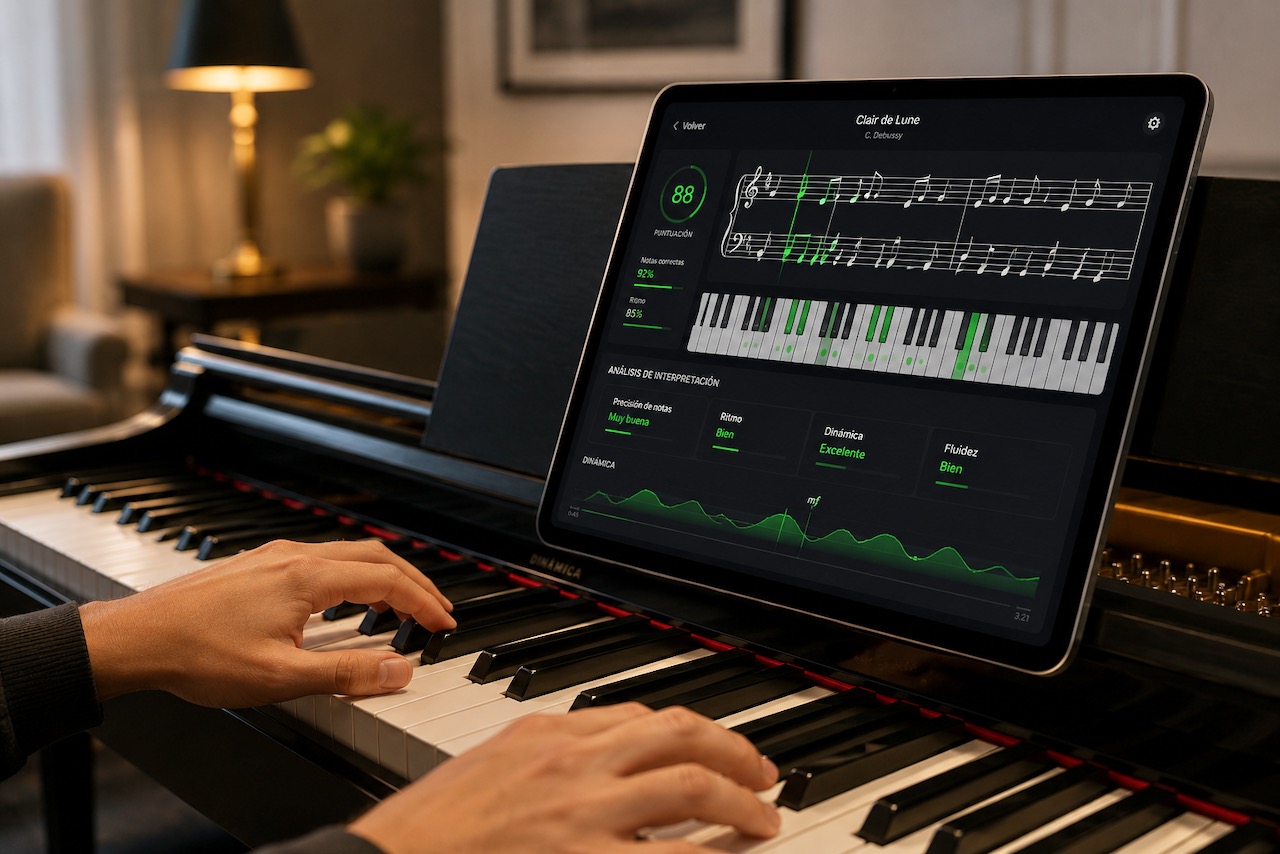
When we talk about artificial intelligence in music education, we’re not referring to a single technology. Most modern piano learning apps combine multiple systems to analyze a student’s performance and provide meaningful feedback during practice.
Some use the microphone on a smartphone or tablet to recognize the notes being played. Others take advantage of MIDI connections on digital pianos to obtain much more precise information about every key press.
The algorithms continuously compare the user’s performance with the original sheet music and can detect rhythm mistakes, incorrect notes, or timing issues.
The most advanced platforms also incorporate machine learning systems that identify performance patterns and adapt certain recommendations based on the student’s progress and practice habits.
Thanks to these technologies, today’s piano learning apps provide a far more interactive experience than traditional digital learning methods.
Benefits of Learning Piano with Artificial Intelligence
Instant Mistake Correction
One of the biggest advantages is receiving immediate feedback while practicing.
Students no longer have to wait until their next lesson to discover what they need to improve.
Greater Motivation
Many apps include goals, progress tracking, and achievement systems that encourage consistent practice.
Personalized Learning
The most advanced platforms can tailor certain recommendations based on each student’s performance.
Flexibility
They allow you to practice anytime and from virtually anywhere.
Progress Tracking
Students can clearly monitor their improvement over time.
Limitations of Artificial Intelligence in Piano Learning
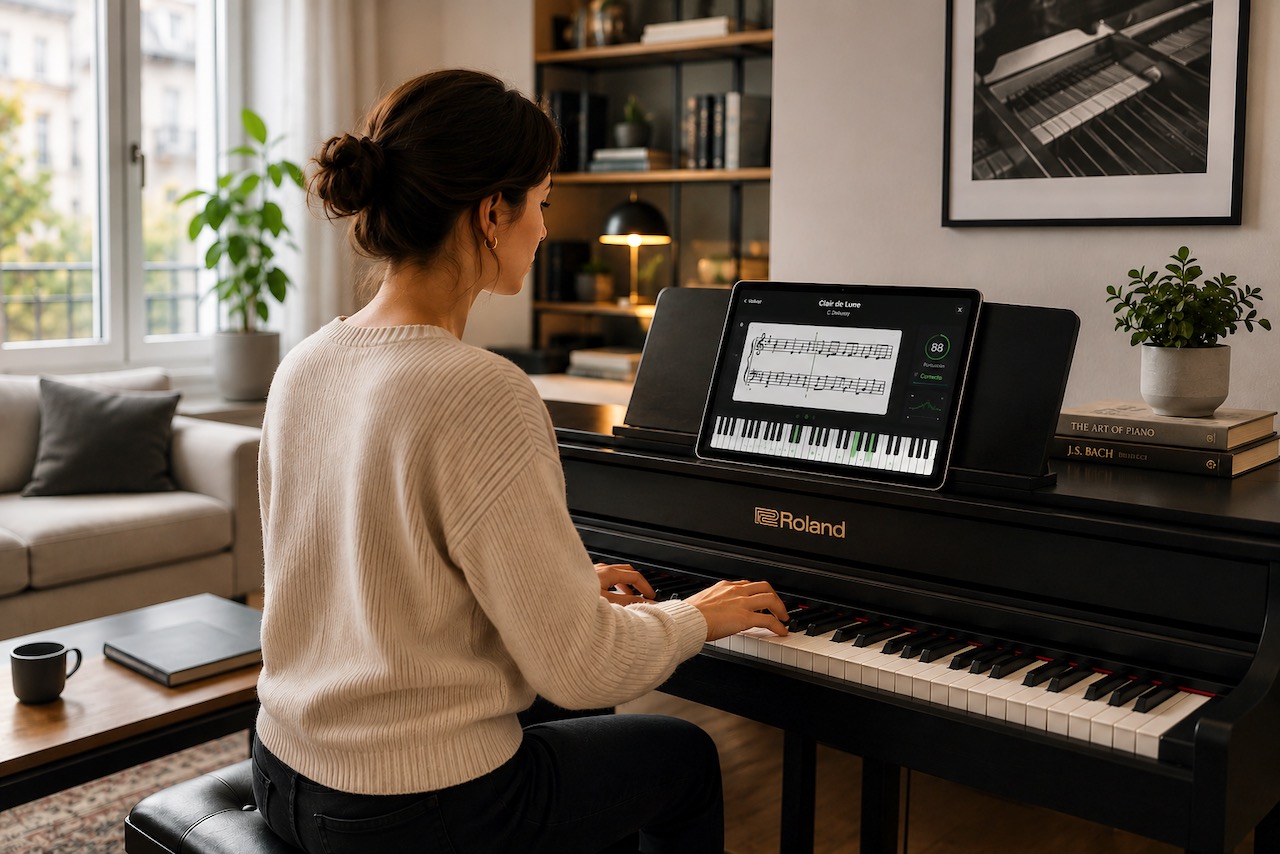
Although today’s piano learning apps have evolved dramatically over the past few years, they still have certain limitations that are worth understanding before relying on them as your primary learning method.
Artificial intelligence is remarkably effective at analyzing notes, rhythm, and accuracy, but there are fundamental aspects of musical development that still depend largely on human instruction.
Proper Posture Still Matters
An app can tell whether you’ve played the correct note, but it generally cannot correct your posture, bench height, or arm position.
These factors have a direct impact on comfort, technique, and the prevention of long-term injuries.
Piano Technique Involves Much More Than Playing the Right Notes
Many students are surprised to discover that performing a piece correctly isn’t simply a matter of pressing the right keys at the right time.
Tone quality, dynamic control, articulation, and the effective use of arm weight are essential aspects of piano playing that remain difficult for automated systems to evaluate accurately.
Musical Interpretation Is Still Uniquely Human
Music is far more than a sequence of correctly played notes.
Elements such as expression, phrasing, artistic intention, and emotional communication are still extremely difficult to measure using algorithms.
For this reason, even the most advanced AI-powered piano apps have limitations when it comes to evaluating the musicality of a performance.
They Are Not a Complete Substitute for a Structured Music Education
Although some platforms offer highly organized learning programs, most are designed as complementary tools rather than complete replacements for formal music education.
Students aiming to reach advanced levels generally benefit from combining independent practice, piano lessons, and modern learning technology.
Can Artificial Intelligence Replace a Piano Teacher?
This is probably one of the most frequently asked questions whenever AI-powered music learning apps are discussed.
The most realistic answer, at least for now, is no.
Modern apps are excellent practice companions. They allow students to practice more frequently, receive immediate feedback, and stay motivated between lessons. However, they still cannot fully replace the experience and expertise of a qualified piano teacher.
A good teacher does far more than correct mistakes. They adapt their teaching methods to each student, identify technical issues, select appropriate repertoire, and help develop a deeper understanding of music.
In addition, music education involves human qualities that software cannot easily replicate, including motivation, empathy, and the ability to explain concepts in ways that suit each individual student.
For this reason, many piano teachers now use these apps as valuable complements to their lessons rather than viewing them as competitors.
The combination of technology and traditional piano instruction often delivers the best results.
Conclusion
Piano learning apps have evolved tremendously over the past few years thanks to advances in artificial intelligence, audio recognition, and digital connectivity.
Today, it’s possible to practice from home using tools that can listen to your playing, detect mistakes, and help you improve far more efficiently than was possible just a decade ago.
DeepPiano, Flowkey, Simply Piano, Piano Marvel, Skoove, and Tomplay represent some of the best piano learning apps currently available, although each is designed for different types of users and learning goals.
The key isn’t finding the perfect app—it’s choosing the one that best matches your skill level, your objectives, and the way you prefer to learn.
When used effectively, these tools can become an excellent complement to any pianist’s practice routine, regardless of their previous experience.
Related Resources for Piano Students
If you’d like to go beyond choosing an app and explore other aspects of learning the piano, you may also find these resources helpful:
Note: Some of the images used in this article have been generated using artificial intelligence for illustrative purposes. These visual representations were created to help explain concepts related to piano learning and the applications discussed, and may not correspond to real products, interfaces, or situations.








Leave a Reply
Want to join the discussion?Feel free to contribute!