
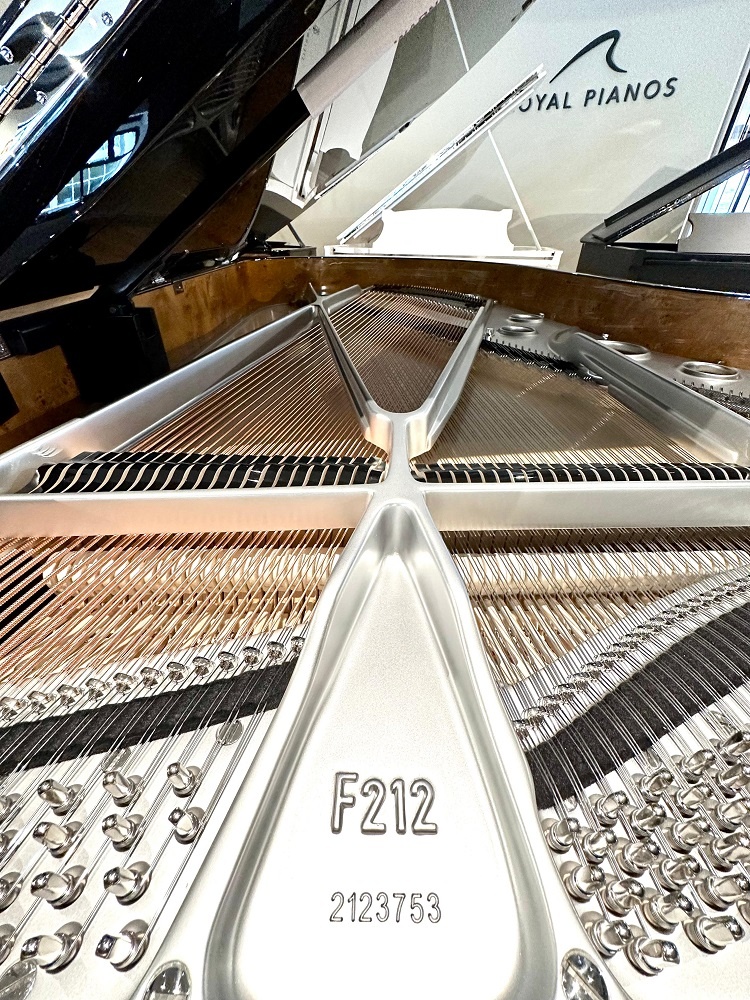
Piano Mechanism: Key to a Perfect Sound
Introduction
At Royal Pianos, specialists in the maintenance of acoustic pianos, we know that a piano is not just a musical instrument but a piece of handcrafted engineering that requires specific care. One of the most important – and often least understood – parts is the internal mechanism or piano “action.” Keeping it in optimal condition is essential to ensure an impeccable sound and a smooth playing experience.
What is the Piano Action Mechanism?
The action mechanism is the set of parts that connects each key to its corresponding hammer, which strikes the strings to produce sound. It is made up of hundreds of wooden, felt, leather, and metal components that work in perfect harmony. The precise regulation of the piano action is fundamental to preserving tonal richness and touch sensitivity. Even the smallest misalignment can affect touch, dynamics, and the instrument’s response.
Types of Piano Action Mechanisms
- Vertical action: Found in upright pianos, it uses a gravity system for the hammers to return to position. Ideal for smaller spaces.
- Double escapement action: Common in grand pianos, it allows for a quicker response and more precise note repetition, essential for technically demanding works.
Each type of action directly influences the pianist’s interpretive ability, becoming increasingly relevant as technical and artistic mastery progresses.
Importance of Regular Maintenance
With use and the passage of time, natural wear, environmental conditions (such as humidity and temperature), and dust accumulation affect the proper functioning of the mechanism. This can cause issues such as:
- Delayed key response.
- Unwanted noises when playing.
- Loss of precision in dynamic nuances.
- Irregular wear on the hammers.
Carrying out preventive maintenance avoids costly repairs and extends the life of the piano, while preserving its market value.
Importance for Students and Professional Pianists
As a pianist advances in their career, the level of sensitivity, precision, and control required increases considerably. A well-maintained mechanism allows for:
- Greater control of dynamics.
- Accurate execution of fast and complex passages.
- Better expressive interpretation and articulation of musical phrases.
- Reduced risk of hand and arm tension injuries caused by a poorly regulated keyboard.
In short, a finely regulated mechanism is indispensable for enabling the pianist to express themselves with total freedom.
What Does Mechanism Maintenance Include?
At Royal Pianos, our specialized technicians offer professional services to keep your piano in optimal condition at all times.
Tips for Taking Care of Your Piano’s Mechanism
- Schedule a technical inspection at least once a year.
- Keep the piano in a stable environment with controlled humidity and temperature.
- Avoid placing heavy objects or drinks on the instrument.
- Always seek accredited professional piano technicians for any service.
Conclusion
Taking care of your piano’s action mechanism is taking care of its soul. At Royal Pianos, we are committed to keeping your instrument at its peak of sonic and mechanical performance. Contact us to schedule your annual inspection and trust our professional piano technicians to extend the life of your instrument.




Leave a Reply
Want to join the discussion?Feel free to contribute!